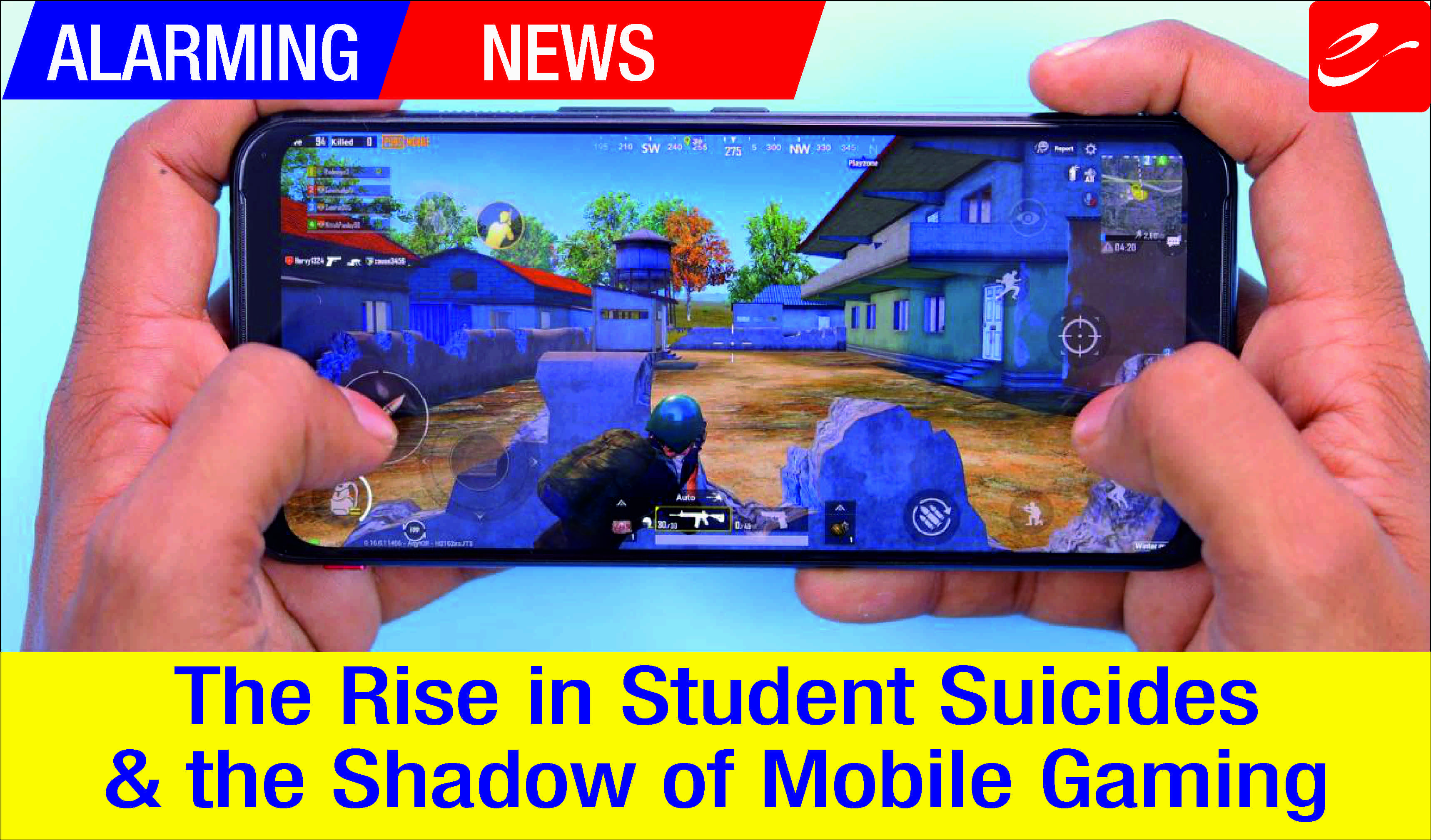
What has alarmed many in India in the recent past is the growing phenomenon of student deaths related to mobile gaming addiction. Many people, including parents, educational institutions, psychiatrists, and lawmakers, are attempting to grasp the connection between some of the worst calamities in the lives of young people and this fun-filled gadget—the smartphone! Statistics indicates the failures of coping mechanisms in this age of so-called empowerment with the advancement of the digital revolution.
Recently, hundreds of children have lost their lives to suicide, with digital addiction identified in several cases. In the context of child welfare statistics from states like Kerala, Tamil Nadu, and Karnataka, the following were identified as factors in digital addiction: compulsive use of mobile phones, online gaming, and social media. As per government estimates, between 2021 and 2025, a total of 41 child suicides in Kerala were due to excessive use of mobile phone and the internet. Amongst children, it has been observed that the risk of digital addiction has the highest impact, especially amongst school-going children. Suspicious behavior regarding addiction to social media, online video games, and the use of their own Smartphones have also led to the death of several children.
Understanding the Link: Mobile Games and Mental Strain
Casual puzzle games, engaging war arenas, and social media are examples of mobile games. These are harmless for the majority of kids. Nevertheless, addictive behavior patterns and suffering may manifest themselves when the preference becomes obsessive and supplants relationships, sleep patterns, education, and even self-maintenance routines.
According to psychologists, a large number of modern mobile games are designed to include aspects of social competition, reward systems, and instant gratification, making it hard for kids to break the habit once they are addicted to the game. Gamming can also become a center of conflict between parents and their kids, as well as a way to ease the emotions for the kids who are already under a lot of pressure to perform well in their academic life, especially for those who are preparing for board or competitive exams. According to the data provided on educationkhoj.com, gamming can increase the stress of school problems, parent problems, and social problems, leading to emotional instability and loneliness.
Notable Cases: Lives Lost Over Mobile Gaming
The potentially deadly combination of youth, mobile gaming, and poor parental support has been highlighted by a number of unfortunate cases that have made headlines all over India in the past few years.
Bhopal — A 14-Year-Old’s Life Lost
A teenager named Ansh Sahu, aged just 14 years, had committed suicide at his home in Bhopal. The teenager’s relatives are worried that excessive addiction to a smartphone game like Free Fire might have led to the teenager's tragic psychological situation. The teenager's mother had reprimanded him that day regarding his excessive use of the Free Fire video game. The police have found that the relative's addiction to a video game involving his mobile phone had led to a substantial amount of money being withdrawn from his account.
Lucknow — Loss of Family Savings and a Child’s Death
Yet another horrific calamity took place in Lucknow in September 2025. During his play of the mobile game Free Fire, it was found that a 14-year-old boy spent Rs 13 lakh of his family’s savings by means of in-app purchase options. This led to his suicide due to emotional stress. This scenario led to a lot of talk about parents and their responsibility for keeping an eye on children. Moreover, it also spoke about the emotional effects of such financial loss on children.
Uttar Pradesh — Three Sisters and a Task-Based Game
Three girls at different ages, 12, 14, and 16, had committed themselves to a facility in Ghaziabad after they became immersed in a Korean online task-based game. Cases like this are considered to be at their most tragic, and this happened at the start of 2026. The girls had become engrossed with the online game, even online communities related to it, to the point that police claims the addiction had reached such horrible levels that even parental restrictions had caused them to crack.
Other Reported Incidents
There are also reports of more incidents of students dying due to reprimands about their addiction to gaming. For example, in Telangana state, a 13-year-old boy died of suicide due to reprimands by his family about his addiction to PUBG, and in Uttar Pradesh state, a 16-year-old boy died due to reprimands about his addiction to gaming.
Root Causes Beyond Games
Experts caution against oversimplification of this issue, in spite of the fact that in many cases, mobile gaming was found to play a major role in media reports and family discourses about these deaths. Gaming addiction is a symptom of more severe underlying mental health issues.
Today’s students have to contend with a lot of pressure to perform academically, social pressures, and family pressures among other things. It is clear that it gets even tougher to differentiate these when paired with other free access to rather interesting apps that could consume hours of a child’s time. According to educationkhoj.com, the absence of gaming is just not enough to bring about prevention to the extent to which child-parent communication, emotional support, and knowledge may be present.
Responsibility of Parents in Preventing Gaming-Related Student Suicides
Experts are very confident that parental responsibility plays a central role in the prevention of mental breakdowns among children, despite the fact that the issue of mobile gaming is often cited as a contributing factor to mental breakdowns among young people. While parents are expected to mentor, monitor, communicate with, and motivate their young ones, they should not be expected to exercise full control over the lives of their kids. One of the best ways of preventing mental breakdowns among young people comes from the parents, and this is cited by websites such as educationkhoj.com.
1. Active Emotional Presence, Not Just Supervision
Parents should be more focused on emotional availability besides controlling their children's screen use. Children often turn to their mobile games to escape the un-understanding environment in their homes, loneliness, and academic demands in school. Children tend to voice themselves when they are being talked to about their feelings, fears, and anxieties.
2. Healthy Digital Boundaries
Parents are responsible for laying down rules about the usage of cell phones and restrictions on children’s cell phone usage. There may be mental instability among children due to sudden prohibition, scolding, and humiliation about their gaming activity. It is more effective to clearly lay down rules in a logical and empathetic manner. Rather than imposing restrictions, educationkhoj.com advocates good practices regarding cell phones.
3. Awareness of Warning Signs
Parents should educate themselves about early signs of addiction or distress, such as:
- Social withdrawal
- Sudden anger when the phone is taken away
- Declining academic performance
- Sleep disruption
- Secrecy or anxiety
Recognizing these signs early can prevent irreversible outcomes.
4. Avoiding Comparison and Excessive Pressure
Children who are already emotionally struggling with various challenges face additional pressures caused by unrealistic academic standards and peer competition. Being addicted to gaming may also imply underlying feelings of low self-worth and failure. Mental health should be prioritized before other measures for parents.
5. Seeking Professional Help Without Stigma
The parents should not hesitate seeking advice from psychologists/counselors in situations where they identify signs of extreme gaming addiction, depression, and anxiety in their children. It is always important to normalize seeking mental wellness advice at home. According to educationkhoj.com, timely action is imperative as it can save a life.
6. Being Role Models
Similarly, youngsters look up to adults and are very watchful about their behavior. Ill practices are inadvertently promoted by adults glued to their phone or who seem disinterested in emotional contact. A wonderful role-model is set by displaying emotional intelligence, composed resolution of conflicts, and balanced use of technology.
7. Creating a Safe Home Environment
Above all, kids should believe that their homes are places of safety, not dread, fear, or condemnation. Mistakes, like losing money on games, failing grades, and excessive TV viewing, should be remedied, not punished.